Jesus Christ Superstar · Editions / The Temple

Jesus Christ Superstar
My record and recording collection
Records, digital files and stories behind the versions I own.
After a long time in preparation, this collection sees the light of day, coinciding with the 56th anniversary of the original Jesus Christ Superstar album, released in the United Kingdom on October 16, 1970.
Machine translation. Interface and sheet texts are machine-translated from the Spanish original and may contain errors. titles, catalogue numbers and other catalogue data are not altered.
Full information: Jesus Christ Superstar - A Resurrection

Edition details
United States · 1994 · 2 discs: CD
Duration: Not stated
Credits: Andrew Lloyd Webber - Music; Michael Lorant - Liner notes; Tim Rice - Lyrics
Tracks
- 1.1 · Overture
- 1.2 · Heaven On Their Minds
- 1.3 · What's The Buzz
- 1.4 · Strange Thing Mystifying
- 1.5 · Everything's Alright
- 1.6 · This Jesus Must Die
- 1.7 · Hosanna
- 1.8 · Simon Zealotes
- 1.9 · Poor Jerusalem
- 1.10 · Pilate's Dream
- 1.11 · The Temple
- 1.12 · Everything's Alright (Reprise)
- 1.13 · I Don't Know How To Love Him
- 1.14 · Damned For All Time/Blood Money
- 2.1 · The Last Supper
- 2.2 · Gethsemane
- 2.3 · The Arrest
- 2.4 · Peter's Denial
- 2.5 · Pilate & Christ
- 2.6 · King Herod's Song
- 2.7 · Judas' Death
- 2.8 · The Trial Before Pilate
- 2.9 · Superstar
- 2.10 · Crucifixion
- 2.11 · John 19:41
Atlanta, 1994: A Resurrection
Amy Ray sings Jesus, Michael Lorant Judas and Emily Saliers Mary Magdalene. A Resurrection brings together Atlanta musicians in a new studio recording of the rock opera. Lorant conceived the project and produced it; Ray took it in at Daemon Records, her independent label. The album came out on two CDs, with the participation of Long Play Records and a charitable purpose tied to the prevention of gun violence. [1][2][3]
Technical details
- Daemon Records / Long Play Records, 19006-4; United States, 1994; two CDs, 25 tracks (14+11). Barcode: 767691900629.
- Music: Andrew Lloyd Webber. Lyrics: Tim Rice. Production: Michael Lorant, assisted by Rob Gal.
- Principal engineering: Rob Gal, The Snack & Shack, Atlanta. Digital editing: Russ Fowler. Mastering: Bennie Quinn.
- Superstar: engineering by Wizard at ABRS, Atlanta. Crucifixion: engineering by Neil Fried at Chelsea South Studios, Atlanta.
- © and ℗1994 Daemon Records. Distribution: RED. The matrices of the two CDs carry 19006-2, different from the 19006-4 printed on the spines and recorded in the catalogue. [1][4]
Repertoire
CD1: Overture · Heaven On Their Minds · What's The Buzz · Strange Thing Mystifying · Everything's Alright · This Jesus Must Die · Hosanna · Simon Zealotes · Poor Jerusalem · Pilate's Dream · The Temple · Everything's Alright (reprise) · I Don't Know How To Love Him · Damned For All Time / Blood Money.
CD2: The Last Supper · Gethsemane (I Only Want To Say) · The Arrest · Peter's Denial · Pilate & Christ · King Herod's Song · Judas' Death · Trial Before Pilate (Including The 39 Lashes) · Superstar · The Crucifixion · John Nineteen Forty-One. [1]
One cast and many bands
The sleeve gives the roles in order of appearance. Paul Schwartz sings the first and third priests; Benjamin, Caiaphas; Mike Mantione, Annas; John Bigay, the second priest; Kelly Hogan, Simon; Gerard McHugh, Pilate; Anne Richmond Boston, the maid by the fire and the chorus; Matt Brown, Peter; Jeff Jensen and Rob Gal, the soldiers; Bill Decker, the old man; Dave Clair, Herod. Social Insanity receives the credit for the voice of Judas in Superstar. [1]
The booklet distributes the music among groups, not a single orchestra. Dew opens with Overture; Lay Quiet Awhile plays What's The Buzz; Cicada Sings, Everything's Alright; Uncle Green, Simon Zealotes and Peter's Denial; Opal Foxx Quartet accompanies Saliers in I Don't Know How To Love Him. Five Eight takes care of Damned For All Time / Blood Money, Engine of Gethsemane, Full Stop of Pilate & Christ and Big Fish Ensemble of Herod. The Murray Hedd Experience appears in several of the dramatic numbers. [1]
Hosanna features The Feed and Seed Marching Abominable, recorded at the Little Five Points Community Center by the mobile unit of Criminal Records. Social Insanity does Superstar; Neil Fried and Paul Jorgensen, Crucifixion; The Revelation String Quartet closes with John 19:41. These credits explain the variety of the project without turning it into an assessment of which version is better. [1][4]
Lorant's idea and Ray's role
Lorant signs the booklet notes in January 1994. He recalls his childhood games with the rock opera and a conversation during a Big Fish Ensemble tour with Indigo Girls in the spring of 1991: they imagined a version made by Atlanta musicians. The joke became a project when Ray proposed releasing it on Daemon. The label tells the same origin today. [1][2]
In David Cohen's interview for Washington Square News, dated 2 December 1994 and preserved by Lifeblood, Ray insists that the vision and the production were Lorant's. She wanted to support his work and would have released it even if she had not sung on it. She also explains how Lorant recorded temporary vocals to help the singers respond to other characters during the sessions. [3]
Steve Hochman dealt with the casting in the Los Angeles Times on 2 October 1994. Ray distinguished between presenting Jesus as a woman and being a woman playing Jesus. Lorant defended the choice as a dramatic role, not a showcase project for the Indigo Girls. The December interview lets one follow that same explanation from Ray's experience in the studio. [3][5]
The charitable purpose
The booklet declares that the proceeds of the CD would go to helping end gun violence and adds that some musicians supported gun control, with differing opinions among the participants. Daemon currently describes the continuation of that contribution to educational projects. Hochman's report links the cause to Lorant, who had been shot during a robbery. They are the purpose and context that the sources attribute to the album, not an obligation to share a political position in order to take part in it. [1][2][5]
The 1994 CD and the later concerts
The Los Angeles Times announced the release for 8 November 1994, a date that CastAlbums records. Ray's interview of 2 December speaks of a record already released and of the launch performances in Atlanta. The sleeve prints © and ℗1994. Daemon's retrospective page indicates 1995; here 1994 is kept for this edition, backed by the object and by the press of that year. [1][2][3][5][6]
The project later reached SXSW in Austin and Summer Nights at the Pier in Seattle. The 1995 SXSW concert had a video edition, documented by Filmed Live Musicals. That stage recording is distinct from the two studio CDs: its direction or filming credits are not carried over to the album. [2][7]
The album's presentation
The cover painting is Jesus Rising Above the Cross, by Lorenzo Scott, lent for the record by the artist and The Modern Primitive Gallery. The booklet credits the art direction to Steve Pilon and the illustrations to Karen Chance. The drawings inside accompany Lorant's essay, the musicians of each number and the technical credits. [1]
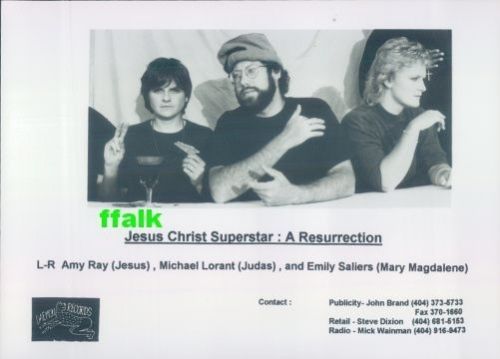
Promotional photograph of A Resurrection: Amy Ray, Michael Lorant and Emily Saliers.
Author not identified.
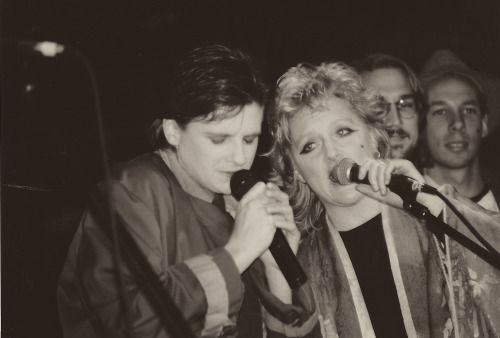
Amy Ray and Emily Saliers in a live performance. The photograph does not document the album session.
Author not identified.
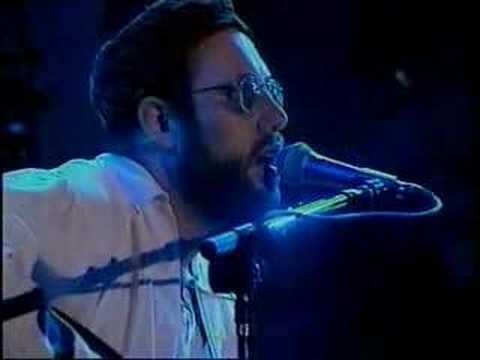
Michael Lorant as Judas in a performance. The photograph does not document the album session.
Author not identified.
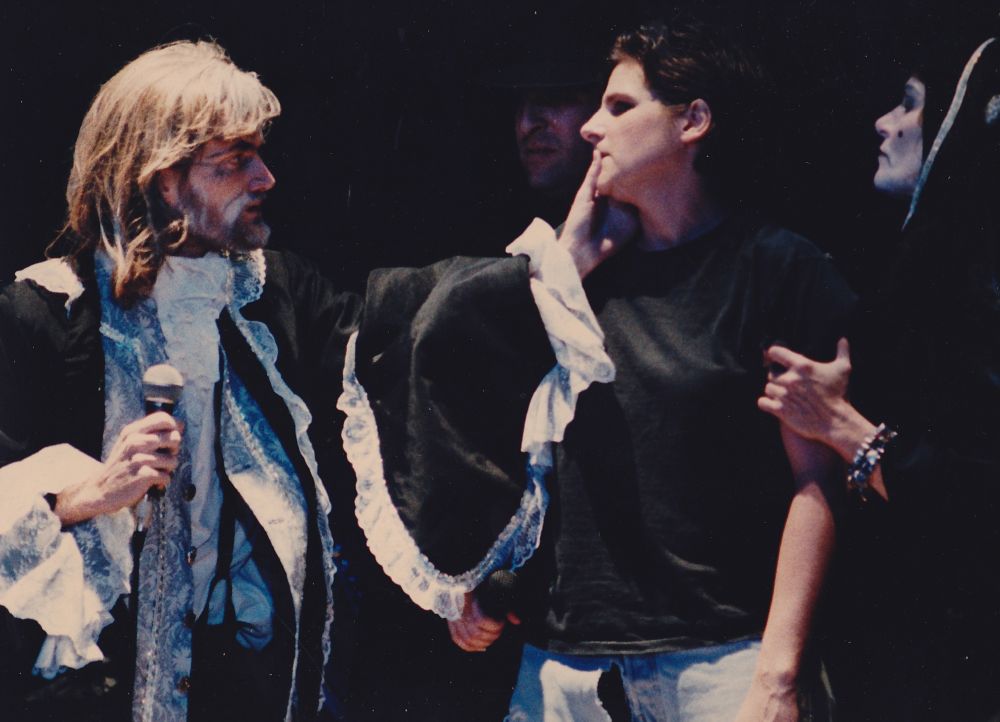
Gerard McHugh as Pilate and Amy Ray as Jesus.
Author not identified.
If you hold the rights to any of these images and want it removed, write to us.
Sources
- Sleeve, booklet and two CDs: physical gallery.
- Daemon Records: history of the project and charitable purpose.
- David Cohen, Washington Square News, 2 December 1994: interview with Amy Ray, preserved by Lifeblood.
- Discogs: Daemon / Long Play, 19006-4.
- Steve Hochman, Los Angeles Times, 2 October 1994: announcement of the album and cast.
- CastAlbums: studio edition, 8 November 1994.
- Luisa Lyons, Filmed Live Musicals: the 1995 SXSW concert and its video.